


Beyond T-72: India Begins Work on Its Most Advanced Combat Vehicle Yet

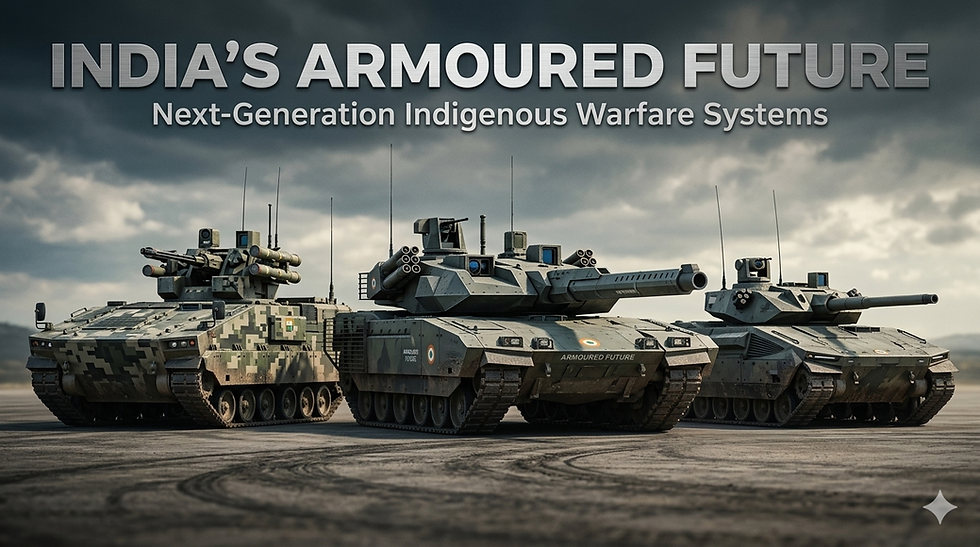
India’s armoured warfare doctrine is preparing for its biggest transformation in decades—and at the center of it is Project Ranjeet, India’s ambitious Future Ready Combat Vehicle (FRCV) programme designed to replace the aging fleet of T-72 tanks.
For years, the T-72 Ajeya has served as the backbone of the Indian Army’s armoured corps. But modern battlefields are evolving rapidly. Drones, loitering munitions, AI-driven targeting systems, precision-guided weapons, and network-centric warfare are changing how tanks survive and fight. The wars in Ukraine and other conflict zones have shown one harsh reality: legacy armour without advanced protection and battlefield awareness can become vulnerable very quickly.
That is where Project Ranjeet enters the picture.
The programme aims to develop a next-generation indigenous combat platform capable of meeting the demands of future warfare while also strengthening India’s domestic defence manufacturing ecosystem. The vehicle is expected to gradually replace nearly 1,700–2,000 T-72 tanks over the coming years, making it one of India’s largest military modernization projects.
Unlike older tank programmes that focused mainly on firepower and armour, Project Ranjeet is being designed as a complete battlefield ecosystem. Reports suggest the future platform will integrate artificial intelligence, drone coordination, active protection systems, advanced sensors, network-centric warfare capability, and even manned-unmanned teaming concepts.
The goal is not just to build another tank—it is to create a highly survivable combat platform for the next 40 years.
One of the most important aspects of the programme is mobility. India’s future combat vehicle is expected to weigh under 60 tonnes, allowing better movement across bridges, rail infrastructure, deserts, plains, and high-altitude terrain. This is critical for India, considering the operational requirements along both the western and northern borders.
Protection is another major focus. Modern anti-tank guided missiles and drone attacks have forced militaries worldwide to rethink armoured warfare. Project Ranjeet is expected to feature layered protection systems, including active protection technologies capable of detecting and intercepting incoming threats before impact. Combined with improved situational awareness and 360-degree battlefield monitoring, the tank could dramatically improve crew survivability in high-intensity combat.
The firepower side is also expected to evolve significantly. While official details remain limited, defence analysts expect the platform to include advanced fire-control systems, long-range precision engagement capability, and integration with modern surveillance assets. Some reports even indicate compatibility with future unmanned combat systems and loitering munitions.
Strategically, Project Ranjeet represents something bigger than a military upgrade. It reflects India’s growing push toward defence self-reliance under the “Make in India” initiative. The programme is expected to involve both DRDO and Indian private industry, potentially creating a large indigenous ecosystem around armoured vehicle manufacturing, electronics, sensors, engines, protection systems, and AI-enabled battlefield technologies.
If successful, the programme could reduce dependence on imported armoured platforms while also opening doors for future exports.
India’s military modernization is no longer limited to buying advanced systems from abroad. Increasingly, the focus is shifting toward building indigenous platforms tailored for Indian operational needs. Project Ranjeet fits directly into that vision.
The T-72 era may soon begin to fade—but what replaces it could become one of the most advanced indigenous armoured warfare ecosystems India has ever developed.


Comments