


India’s Defence Boom: From Budget Push to Global Power Shift


India’s defence sector is no longer just about national security — it is fast becoming one of the country’s most powerful economic and technological growth engines.
Over the past few years, a clear shift has emerged. What was once a heavily import-dependent ecosystem is now transforming into a self-reliant, innovation-driven defence industry. And this transformation is being driven by three key forces: rising defence budgets, rapid indigenisation, and the changing nature of modern warfare.
A Budget That Signals Intent
India’s defence spending has seen a steady and aggressive rise, reflecting a long-term strategic vision rather than short-term reactions.
The defence budget has grown significantly — from around ₹5.7 lakh crore in FY23 to an estimated ₹7.8 lakh crore by FY27.
This increase is not just about spending more — it’s about spending smarter.
A larger share of the budget is now being directed towards capital expenditure, which includes:
Advanced weapon systems
Indigenous platforms
Modernisation of existing forces
This shift clearly indicates that India is preparing not just for today’s threats, but for the future battlefield.
From Importer to Supplier
For decades, India was one of the world’s largest arms importers. But that reality is changing fast.
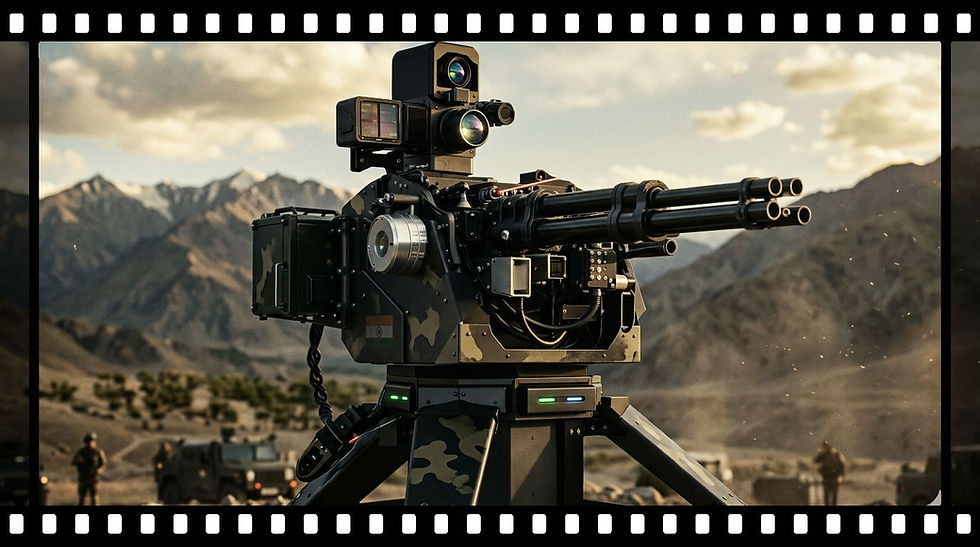
Today, nearly 65% of defence equipment is being produced domestically — a massive reversal from earlier dependence on imports.
This transformation is being powered by:
Government initiatives like Aatmanirbhar Bharat
Strong policy support for domestic manufacturers
Increased participation from private companies
The result?
A rapidly expanding ecosystem where public sector giants and private players are working together to build indigenous capabilities.
Technology Is Redefining Warfare
Modern warfare is evolving — and India is adapting accordingly.
The battlefield is no longer limited to tanks and fighter jets. Today, it includes:
Drone swarms
Artificial intelligence
Electronic warfare
Space-based surveillance
These technologies are fundamentally reshaping how wars are fought.
And India is investing heavily to stay ahead in this new domain.
From AI-driven systems to counter-drone technologies, the focus is shifting toward smart warfare, where speed, automation, and precision matter more than sheer firepower.
Economic Impact: More Than Just Defence
One of the most overlooked aspects of this transformation is its economic impact.
Defence spending is acting as a powerful multiplier for the economy by:
Creating high-skilled jobs
Boosting manufacturing
Driving innovation in deep-tech sectors
Over the last few years, defence companies have also delivered strong financial growth, with revenues and profits rising significantly alongside increased government spending.
This makes defence not just a strategic priority — but also a major economic opportunity.
Exports: The Next Big Leap
India’s ambitions are no longer limited to self-reliance.
The next goal is clear: becoming a global defence exporter.
Defence exports have already seen rapid growth, and the government is targeting multi-billion-dollar export levels in the coming years.
Countries around the world are now looking at India as a reliable supplier of:
Missile systems
Aircraft components
Electronic warfare systems
But there’s one key factor that will determine success:
Execution.
Global buyers don’t just look at technology — they look at delivery timelines, reliability, and long-term support.
Conclusion: A Structural Transformation
India’s defence sector is no longer evolving — it is undergoing a structural
transformation.
This shift is being driven by:
Strong government backing
Rapid technological adoption
Growing private sector participation
But the real test lies ahead.
The question is no longer whether India can design advanced systems.
The real question is:
Can India deliver them at scale – and on time ?
Because in modern warfare — and in global markets — capability matters.
But delivery decides everything.

Comments