


India’s Quiet Push to Reverse-Engineer the AL-31FP Could Transform the Future of the Su-30MKI Fleet

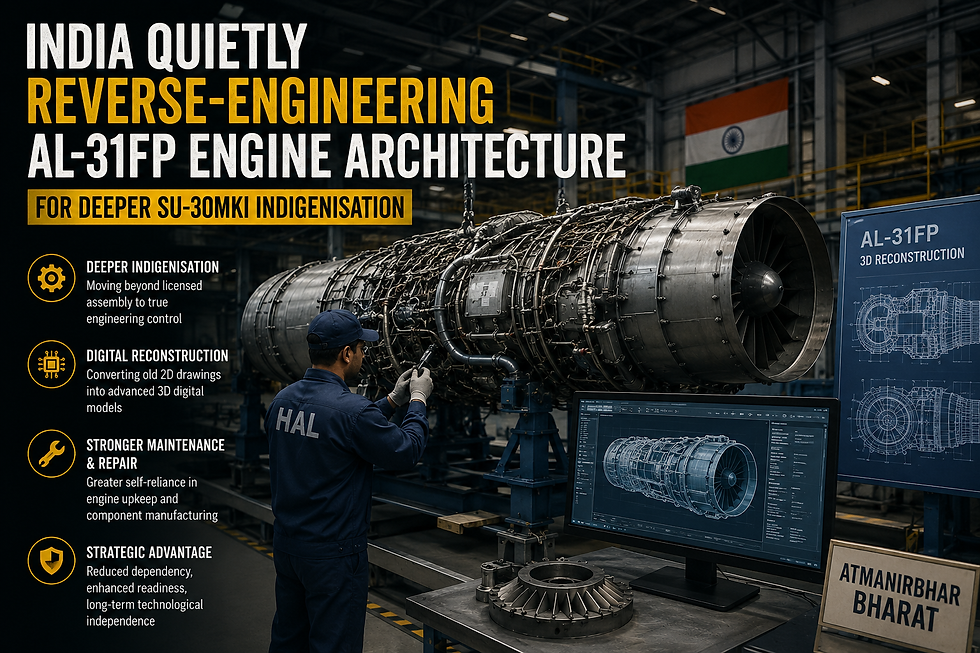
India’s defence aviation ecosystem may be entering a far more ambitious phase than many realize. Reports suggesting that Hindustan Aeronautics Limited (HAL) is quietly reverse-engineering the architecture of the Russian-origin AL-31FP engine point toward a deeper strategic shift in India’s military-industrial thinking. Rather than remaining dependent on licensed assembly and imported subsystems, India now appears focused on gaining long-term technological control over one of the most critical engines powering the Indian Air Force’s frontline combat fleet.
The AL-31FP turbofan engine powers the Su-30MKI fighter aircraft, which forms the backbone of the Indian Air Force. With more than 270 Su-30MKIs in service, maintaining engine availability and reducing foreign dependency has become a major national security priority. Over the years, HAL has already assembled these engines under license at its Koraput division, but several critical components, metallurgy processes, and engineering details remained dependent on Russian supply chains.
What makes the latest development important is the reported move from simple manufacturing toward advanced engineering reconstruction. According to reports, HAL engineers are converting old Russian 2D technical drawings into modern 3D digital models with interface mapping, fitting details, and subsystem integration data. This process effectively creates a digital understanding of the engine’s architecture, enabling Indian engineers to study production methods, maintenance cycles, and future upgrade possibilities in far greater depth.
In practical terms, this could significantly strengthen India’s self-reliance in military aviation. Reverse engineering does not necessarily mean copying the engine illegally; rather, it often involves developing a comprehensive technical understanding that allows domestic industries to manufacture more components locally, improve repair capabilities, and gradually replace imported parts with indigenous alternatives. For a country operating one of the world’s largest Su-30 fleets, this capability is strategically invaluable.
The timing is also noteworthy. India recently signed a major ₹26,000 crore contract for 240 additional AL-31FP engines, with HAL expected to progressively raise indigenous content levels during production. Government statements indicate that localization could eventually rise beyond 60%, marking one of the deepest aerospace indigenisation efforts ever attempted in India.
This effort could also generate long-term benefits beyond the Su-30MKI programme. Technologies, materials expertise, thermal management knowledge, and turbine engineering lessons gained from studying the AL-31FP could directly support future indigenous engine projects such as the Kaveri revival programme and the powerplants planned for India’s AMCA fifth-generation fighter. India’s growing expertise in high-temperature alloys and engine metallurgy is already visible through recent indigenous materials certification efforts linked to the AL-31FP ecosystem.
At a geopolitical level, the move reflects a broader lesson India has learned over decades: dependence on foreign military supply chains carries strategic risks, especially during crises or sanctions. By deepening control over the Su-30MKI’s engine ecosystem, India is not just sustaining an aircraft fleet—it is gradually building the technological foundation needed for future aerospace independence.
The process may remain largely out of public attention for now, but its long-term impact on India’s defence manufacturing ambitions could be enormous.


Comments